 Storeboard
/Blog/How much keyword data you need
How much keyword data do you actually need?
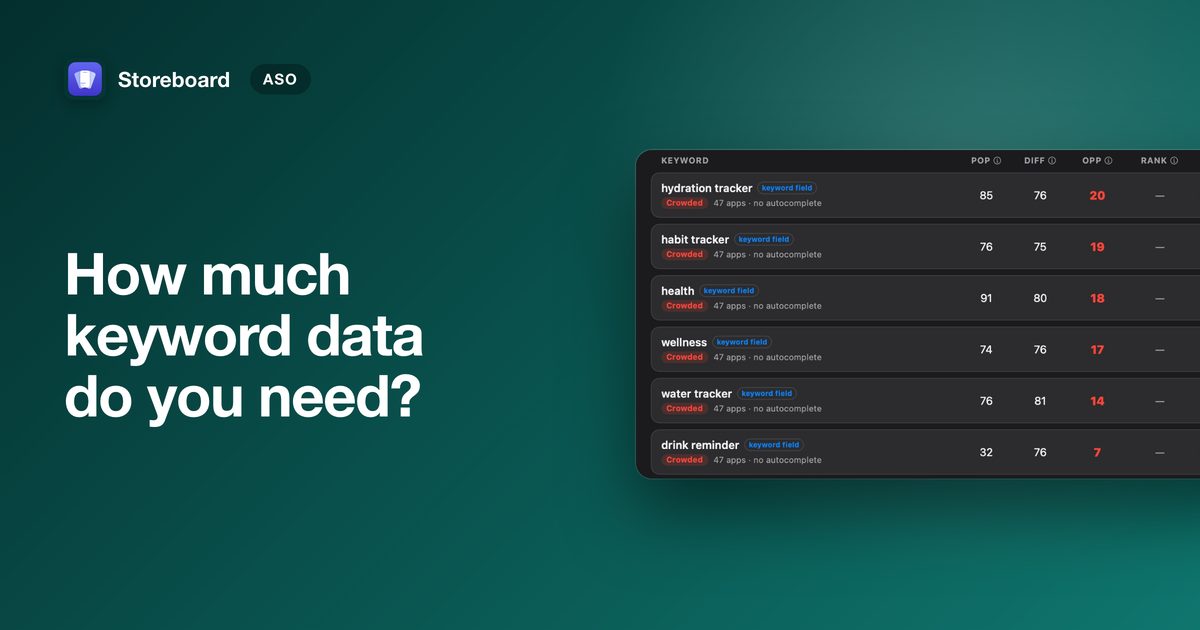
ASO platforms advertise millions of tracked keywords, ranking histories, and positions refreshed every four hours. On-device tools like Storeboard compute scores live from Apple's public signals instead. Which one you need depends on a question most comparisons skip: what decision are you trying to make?
What the two architectures actually are
Rank-tracking platforms (ASO.dev, ASOWay, Appfigures and friends) run servers that query the App Store continuously, for every customer's keywords at once. That builds something no on-device app can: a history. Where you ranked in March, whether a competitor is climbing, how a category's search traffic shifts across a year.
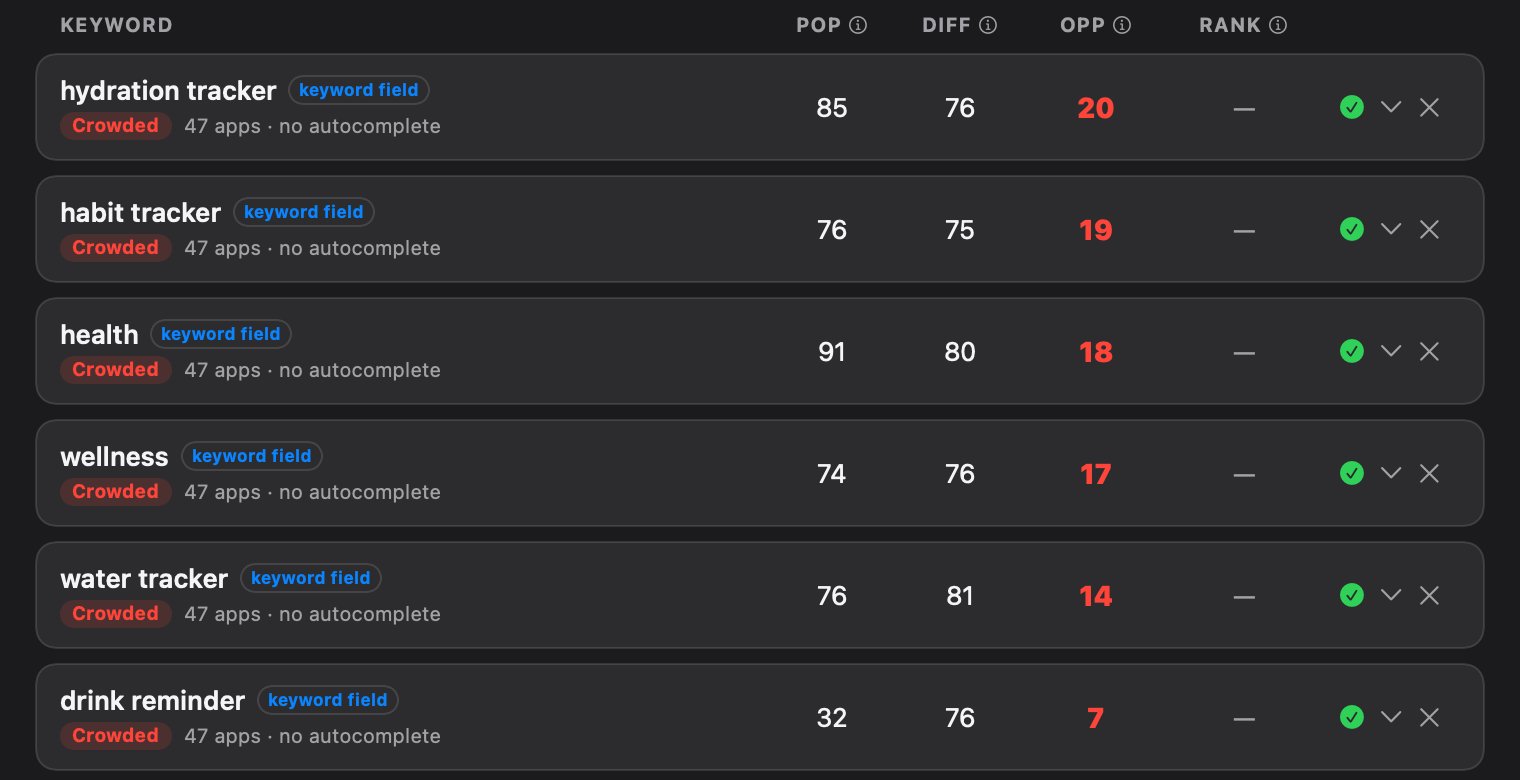
On-device tools ask Apple directly, when you ask. Storeboard reads the same public signals Apple exposes to everyone — search results, autocomplete, per-storefront metadata — and scores each keyword's Popularity, Difficulty and Opportunity on the spot, then records what it sees so trends build over time on your machine. No account, nothing uploaded, no per-keyword pricing.
The decisions, mapped to the data they need
| Decision | Needs |
|---|---|
| "Which keywords should go in my 100 characters?" | Current scores + who ranks today — on-device is enough |
| "Is this keyword winnable for my app?" | Competitor strength, age, momentum — on-device is enough |
| "Did my last metadata change move my rank?" | Your downloads/conversion before vs after — on-device is enough (how) |
| "Where exactly do I rank for 300 terms, daily?" | A tracking database — use a platform |
| "Is my competitor's new keyword strategy working?" | Their ranking history — use a platform |
The honest trade-off
We build an on-device tool, so discount accordingly — but we'll state the other side plainly: if you're an agency reporting rank movements to clients, or a publisher running keyword strategy across a large portfolio, you need a tracking database, and no on-device app should pretend otherwise. Our own Mac ASO tools comparison recommends ASO.dev for exactly that job.
The reverse is also true. For choosing and iterating your own metadata — the job most indie developers actually have — millions of tracked keywords add depth you'll never open. The scores that matter are the ones attached to a decision: put this word in, leave that word out, target this market first. That's a judgment made from today's data, and today's data is public.
Depth you can't get from a database
One thing runs the other way entirely. Because on-device tools sit next to your listing rather than your rank reports, the keyword work flows straight into the metadata: coverage checks that catch wasted duplicate words across name, subtitle and keywords; title-term analysis showing which words the ranking apps share; captions and localizations written from the same keyword list. Data platforms measure the store; a listing studio changes what the store sees. Different jobs — and knowing which one you're hiring for is most of the answer.